
Large portions of this entry were originally posted to the UMBC First Generation Student Network in February 2021
As to not assume that you are familiar with me, it is likely a good idea that I take a moment to introduce myself. I am the Director of UMBC’s Office of Academic Opportunity Programs (AOP). AOP houses programs at UMBC such as the First-Gen Network, the LSAMP Program and the McNair Scholars Program that support students who are members of groups traditionally excluded in higher education (Low Income, First Gen, BIPOC) to achieve their goals. But more importantly, I am a first-generation college grad. The goal of this message was to offer words of encouragement, and food for thought. Originally, it also provided links to campus resources.
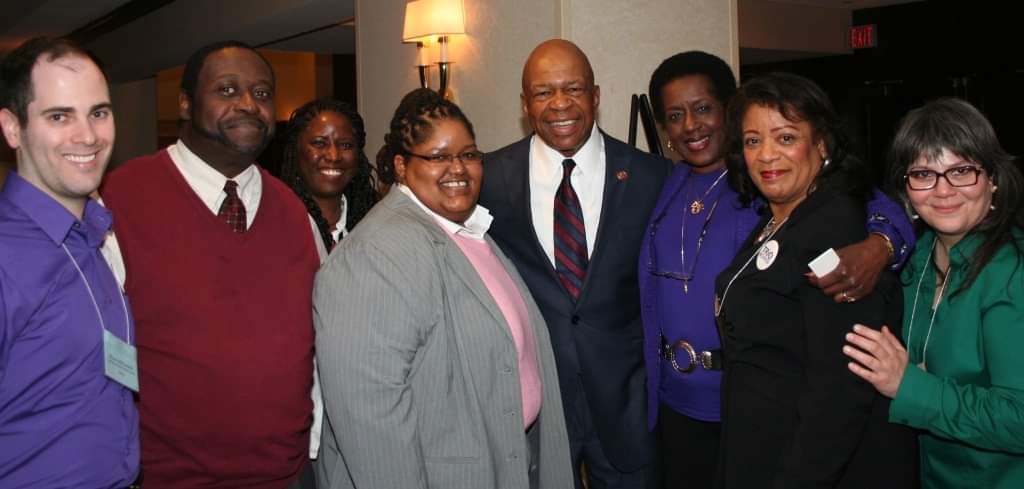
The late Congressman Elijah E. Cummings, son of South Carolina sharecroppers, who relocated to Baltimore to raise their family, often recounted the experiences of his life that shaped him. Educated in Baltimore City Public Schools, he was initially tracked into a Special Education curriculum. Ultimately, he graduated with honors from Baltimore City College, was initiated into Phi Beta Kappa at Howard University and earned a law degree from the University of Maryland School of Law.
It was in his early years that he began to transform his pain to his passion, which became his purpose. He saw his purpose as one of public service. He started in a law career, but after 19 years of practicing law, was elected to the Maryland House of Delegates and ultimately, the US House of Representatives. We each will have experiences which shape our path, and trials we’ve already blazed to reach our current place.
Pain
A doctor once told me that pain is one method your body uses to let you know you need a change. For example, for those without nerve challenges, a pebble in your shoe would precipitate a chain of events that culminates in the investigation of the source of the pain and typically, dumping the pebble from your shoe.
While the doctor was speaking of the pain that tells you to adjust your physical position, this adage has other applications. Situations that cause physical and/or mental pain call for change. I often hear stories of students choosing a major or a career path because of a life experience that irrevocably changed them, for better or worse. Why do you do what you do? What’s your catalyst?
I recently went through a period with my dissertation that was causing me great discomfort. I was sad because I was grieving the death of Christine Harris, my best friend and at the same time, I was frustrated because I felt stuck, waiting for feedback. The frustration this caused made me move out of my comfort zone and have some honest conversations with my committee members.
Passion
Most recently, I’ve taken up the mantle of increasing my support of students from communities traditionally excluded in higher education and the people who work with and for them. It’s something that I’ve spent my career doing, but I’m seeing needs unfulfilled and it’s my turn to carry the torch.
What is your passion? For me, the pain of seeing others not have the same educational opportunities I have experienced drove me to a career in higher education. I am passionate about educational access and opportunity for all students. Like me, you may not find your passion in the classroom, but know that the lessons you are learning both in and out of the classroom are shaping and building the toolbox you will use to address your passion. Know that over your life, what you are passionate about may change, but I implore you to examine what pursuits make you happiest and find ways to incorporate them into your life. In an interview with 60 minutes in 2019, Congressman Cummings paraphrased Voltaire in saying “You must cultivate your own garden”. But once your garden is cultivated, what will you do for others?
Purpose
And finally, from that which you are most passionate about, your purpose can arise. Purpose is our why. Some of us have already found our purpose and move toward it everyday. Some of us are still discovering our purpose and that’s ok. What things that make you happy can benefit you and our world? How will you make your mark?
Losing my friend has pushed me to walk a new path and to want more. But to get there on my own terms.
The late Cicely Tyson was interviewed shortly before her death and was asked a simple question: “When the time comes, what do you want us to remember about you?” Her response: “I done my best…that’s all.” How will you do your best? What support do you need?

 Lifting as I Climb